That’s a wrap- and I’m feeling optimistic!

Blog 3- Kiana’s IDRP Journey

Sunday 2nd June 2019

That’s a wrap- and I am relieved to say that I’m feeling optimistic about my International Development Research Project (IDRP) experience. I just revisited the expected IDRP learning outcomes for the first time in six months and was shocked to realise that my most significant changes (coincidentally…or maybe not) align. The most significant experiences I explored in my presentation and Reflective Research Report involve valuing solid evidence-based research to support practice, having networks and connections, and recognising praxis.

Rahnema’s (2006, pp. 401-402) ideas of being the change you want to see, and starting this process by facing one’s own truths. During my IDRP oral presentation I expressed thoughts that I might be most effective working in Australia with Indigenous Australian people before I considered working in other countries. I received feedback that I should reflect on this idea more deeply than I anticipated. I have had to continuously be reflective and reflexive throughout my International Development journey. This is a tool I need to, and want, to take with me as I develop as professional and a person.  

Friere’s (2000) Pedagogy of the Oppressed and ideas of ‘the oppressed helping the oppressed’ struck me from the moment I read it, and I made reference to it from the outset of my IDRP. I feel privileged to have witnessed this participatory method work in practice and help a vulnerable group of people within a peer support program.

Implementing sound, inclusive participatory methods can be challenging in the reality of development (Hirschmann 2010). I have seen this first hand in my work as a social worker. However, Chambers (2017) ensures that the 21st century will be an exhilarating and fulfilling time for those passionate for a better world- and I believe this!

In closing, I reflect back on what I really wanted out of the International Development (ID) program. I saw a lot of stuff in the world that didn’t sit well with me, and I wanted to somewhat make change. During a period in my studies I felt somewhat hopeless, like my intentions were wrong and ID was the wrong path for me. As I complete my studies I’m now optimistic, I’ve had time to process everything I have learnt. I think there is space for me, somewhere at some time to somehow make the world better.  
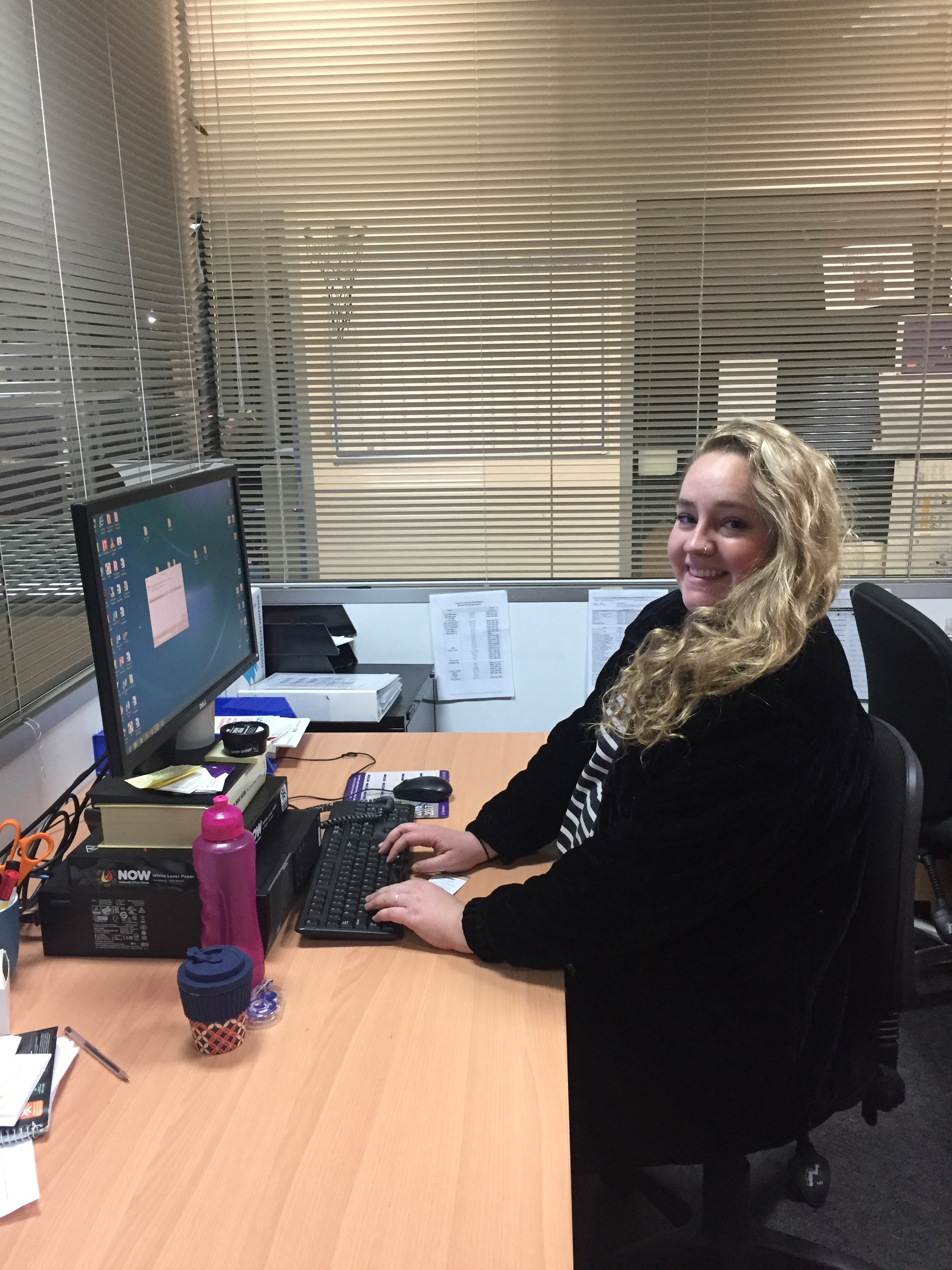
Me in my office at work
I made my colleague take a photo of me ‘doing work’. They soon pointed out there was nothing on the screen.

Sums up my workplace nicely
When you are trying to get a nice solo photo IDRP, but your clients have other ideas.

References

Chambers, R 2017, ‘Knowing for a better future’, in Can We Know Better?: Reflections for Development, Practical Action Publishing, Warwickshire, pp. 144-179.

Freire, P 2000, Pedagogy of the Oppressed, Continuum, New York.

Hirschmann, D 2010, ‘Keeping ‘the last’ in mind: Incorporating Chambers in consulting’, Development in Practice, vol. 13, no. 5, pp. 487-500.

Rahnema, M 2006, ‘Towards Post-Development: Searching for Signposts, A New language and New Paradigms’ in M Rahnema & V Bawtree (eds), The Post –Development Reader, Zed Books, London, pp. 377-404.

Looking Toward Collaboration and Looking Forward to Relearning

Blog 2- Kiana IDRP Journey

11th May 2019

I am now in the midst of my research project and my output has clear direction and structure. Just to jog your memory- part of my paid job is to manage a new and already active peer support worker program in a homelessness organisation.  My project output is a report to enhance this program.

One of the benefits of incorporating my study with my work is that my research is being organically implemented into the program. I have been given the reigns to work quite autonomously with the development of the program, so it is actually relieving to know that my decisions are being somewhat determined by evidence-based research. For example, a theme that emerged from literature was the importance of stakeholders having an understanding of the program (Centre of Excellence in Peer Support 2014, p. 5; King & Panther 2014, p. 8-9; Substance Abuse and Mental Health Services Administration (SAMHS) 2011, p. 16). I realised I had been developing the program autonomously and my colleagues and managers were unable to understand the value of the program. I was immediately able to set up several meetings and presentations with my colleagues to explain the program development.

I’m reflecting back on one of the essential readings for this course. Although from a business perspective of project management, it is relatable to development. Cimil (2005, p. 155-161) explains that projects involve different actors, all with different and complex perspectives. This made me consider all of the varied perspectives of the actors involved in the program. If I don’t take them ‘on the journey’ of developing this program, they would not understand it, appreciate it or be able to provide input.

This insight has helped me step back and realise that I shouldn’t do things on my own. Firstly, diverse perspectives are valuable. Secondly, it is challenging to assimilate a new program into an organisation if stakeholders don’t understand or appreciate it. I’m stepping away from what I have previously learnt- that requesting things be a group effort makes me seem incapable. I reflect back on the Learning and Participation course, and realise I might be starting to catch onto Tlostanova and Mignolo’s (2012) ideas of ‘learning to unlearn’. To develop both personally and professionally I should look toward collaboration and look forward to relearning.

The weekly Wellbeing Program I coordinate, including peer support groups
(Names of workers have been blacked out)

References

Centre of Excellence in Peer Support 2014, ‘Considerations When Setting Up a Peer Support Service’, Centre of Excellence in Peer Support, viewed online 2 April 2019, < https://www.peersupportvic.org/index.php/2014-12-15-22-42-49/2014-12-16-02-22-27/Resources/CEPS-Setting-up-a-Peer-Support-Service/&gt;.

Cicmil, S 2005, “Reflection, participation and learning in project environments: a multiple perspective agenda”, in Love, P, Fong, P & Irani, Z (eds), Management of Knowledge in Project Environments, Elsevier, Sydney, pp. 155-177.

King, J, Panther & G 2014, ‘Peer Support Themes’, AOD Collaborative Group, viewed online 2 April 2019, < https://www.intentionalpeersupport.org/what-is-ips/&gt;.

Substance Abuse and Mental Health Services Administration (SAMHS) 2011, ‘Building Your Program: Consumer Operated Services’, SAMHS, U.S. Department of Health and Human Services, viewed online 3 April 2019, <https://www.peersupportvic.org/index.php/2014-12-15-22-42-49/2014-12-16-02-22-27/Resources/Building-Your-Program-COSP—SAMHSA-2011.pdf/&gt;.

Tlostanova, M. V & Mignolo, W.D. 2012, Learning to Unlearn: Decolonial Reflections from Eurasia and the Americas, Colombus: The Ohio State University Press.

Experiencing Theory in Practice

Blog 1- Kiana’s IDRP Journey

December 20th 2018

My research project involves enhancing a new peer support worker program at Launch Housing Southbank in Melbourne. Launch Housing is a Victoria- based non-government organisation for homelessness and housing. The Launch Housing Southbank site is a crisis accommodation service for single adults experiencing homelessness. My task is to produce a report which researches peer support and provides the organisation with some evidence-based recommendations for the program. I currently work within this service and manage and supervise the peer support worker program.

Peer Support has been extensively utilised in sectors such as mental health, alcohol and other drugs and disability. However there is limited knowledge, experience and literature in peer support work in homelessness, specifically with in crisis accommodation settings. My motive for this research is to bring substance and evidence-based practice to my work.

A significant insight I have had is making connections between my work and development studies. Freire (2000) promotes the idea of the oppressed freeing themselves. Aligned with this idea, the peer support program involves employing people with a lived experience of homelessness to provide support for people currently experiencing homelessness. Freire’s (200, p. 45) ideas of false generosity and forcing people to ‘extend their trembling hands’ have stuck with me. In the homelessness sector I have seen many systems and workers that force people to somewhat beg or jump through hoops. Being able to work on a project that aims to eliminate this and promote a dignified service is important to me.

Making this connection was an important step in developing the skills I need to use theory in practice. Being able to see theory in practice has increased my appreciation for the richness of some literature. In the future I will continue to make connections with theory and my practical work. This will help me develop into a professional who constantly learns and who uses evidence-based practice.

Launch Housing Southbank Communal Dining Room
Many peer support groups are held in this space
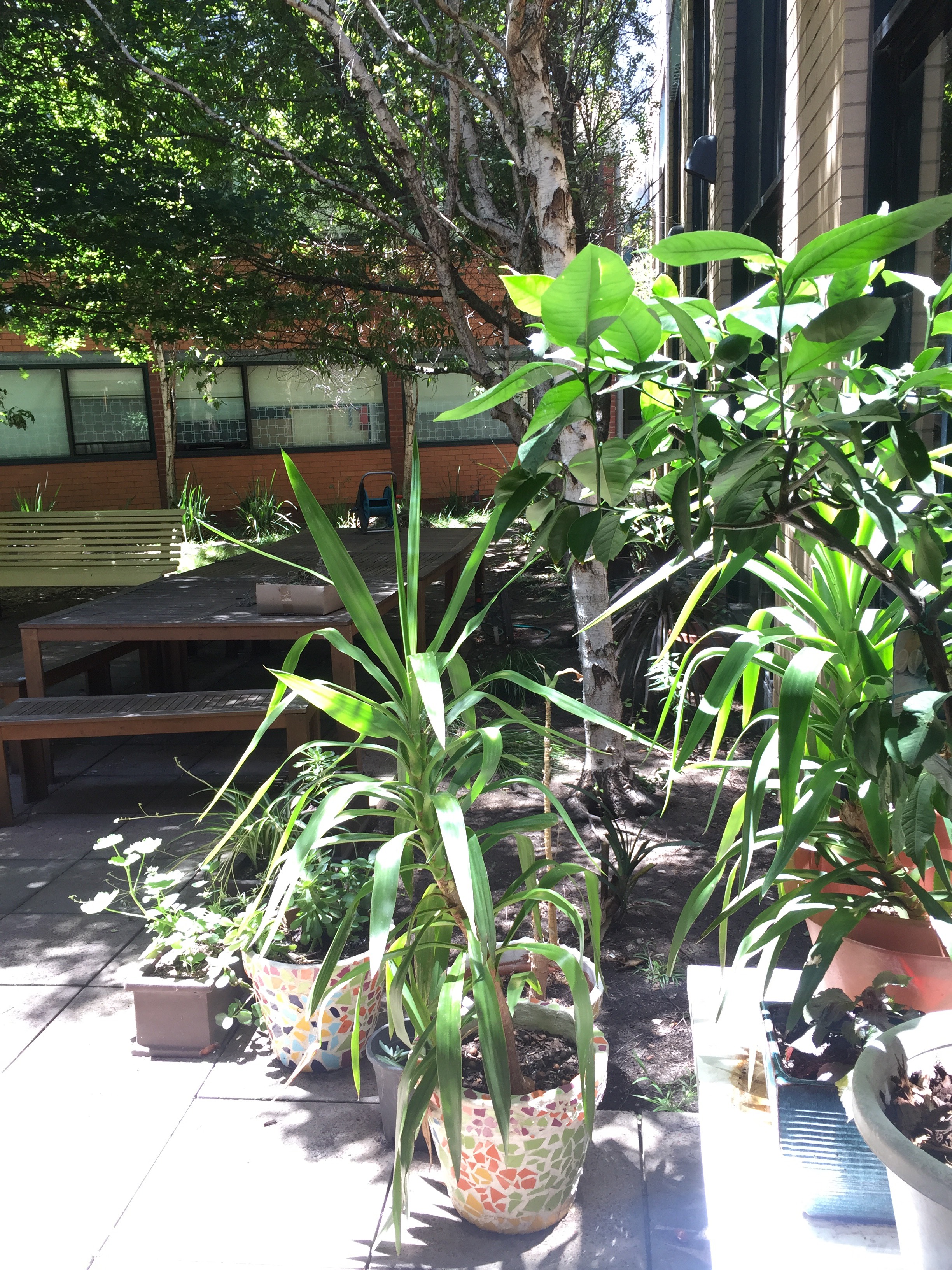
Launch Housing Southbank Garden
This space is used for socialising, group activities and chats with workers

Reference

Freire, P 2000, Pedagogy of the Oppressed, Continuum, New York.